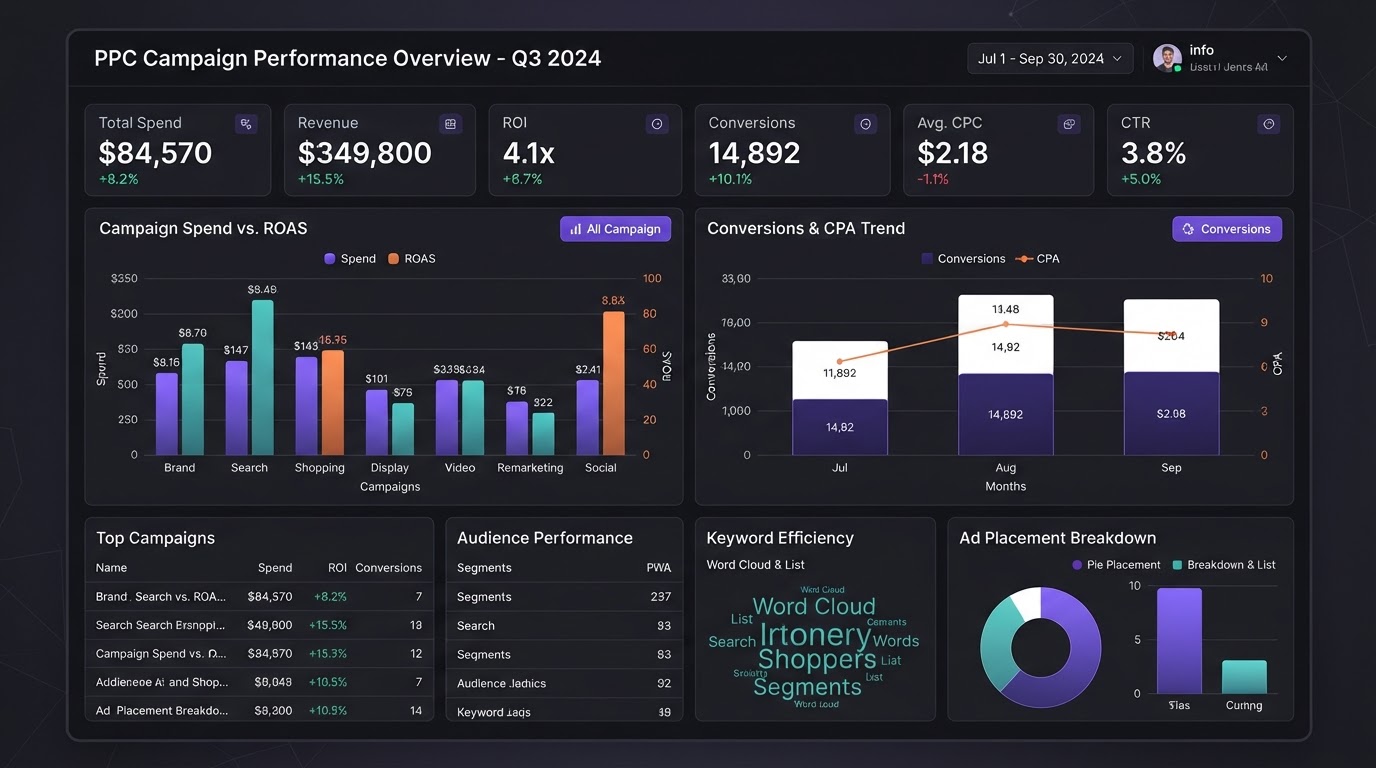
PPC Management: Eliminating Wasted Google Ads Spend In Competitive UK Niches
A practical guide to negative match types, search query auditing, and Performance Max structuring to maximise return on ad spend and stop paying for irrelevant clicks.
The quiet drain of wasted ad spend
Most UK businesses running Google Ads are wasting a significant portion of their budget on clicks that will never convert. It's not usually dramatic, it's a steady, quiet drain of money on irrelevant search terms that slip through loose match types and under-managed campaigns.
When we audit a new PPC account, we typically find 20–40% of spend going to clicks that have no chance of becoming a customer. That's budget that could be generating real enquiries, instead funding accidental clicks from people searching for something entirely unrelated to what the business offers.
The good news: this wasted spend is almost entirely recoverable with disciplined PPC management. The techniques aren't secret, they're just routinely neglected by accounts that are set up and left to run themselves.
Why broad match is burning your budget
Google's broad match type is designed to show your ads for a wide range of related searches, using AI to interpret intent. In theory this captures valuable queries you hadn't thought of. In practice, it routinely matches your ads to wildly irrelevant searches that drain your budget fast.
A campaign targeting 'kitchen fitting London' might, under broad match, show for 'kitchen jobs London', 'kitchen cleaning', or 'cheap kitchen units', none of which represent a customer ready to commission a kitchen. Every one of those clicks costs money and produces nothing.
The solution isn't to abandon broad match entirely, but to use it carefully, paired with rigorous negative keyword management and regular search-term auditing. Without those guardrails, broad match is a budget incinerator.
The power of negative keywords
Negative keywords are the single most underused tool in PPC. They tell Google which searches NOT to show your ads for, instantly stopping wasted spend on irrelevant terms.
Building a comprehensive negative keyword list is an ongoing discipline, not a one-off task. Every week, review the actual search terms triggering your ads and add negatives for anything irrelevant. Common categories to negate include job seekers ('jobs', 'careers', 'vacancies'), freebie seekers ('free', 'cheap', 'how to'), unrelated locations, and competitor-adjacent terms you don't want to pay for.
A well-maintained negative list can recover thousands of pounds of wasted spend per month, money that immediately redirects to genuinely relevant, converting searches.
Search term auditing: the weekly discipline
The search terms report is your window into what people actually typed before clicking your ad. Reviewing it weekly is the difference between a managed account and an abandoned one.
Look for three things: irrelevant terms to add as negatives, valuable terms to promote into their own ad groups with tailored ads, and patterns that reveal new keyword opportunities. This continuous refinement is what separates profitable PPC from expensive PPC.
Accounts that aren't audited regularly drift, Google's automation gradually expands where it shows your ads, and without oversight, waste accumulates. Weekly auditing keeps your spend tightly focused on what converts.
Structuring Performance Max properly
Performance Max is Google's AI-driven campaign type that runs across Search, Display, YouTube, Gmail and Discover in one. It's powerful, but it's also a black box, Google's AI decides where your ads appear, and without careful setup it can waste budget on low-quality placements.
The keys to Performance Max success are: complete, high-quality creative assets in every format, accurate conversion tracking (so the AI optimises for real enquiries, not just clicks), clear audience signals to guide the AI, and regular review of where spend is actually going.
Never launch Performance Max and walk away. Treat it as a campaign that needs ongoing oversight, checking placement reports, asset performance, and conversion quality, so the AI works in your favour rather than burning budget on junk traffic.
Landing pages: where PPC wins or loses
Even a perfectly managed ad account wastes money if the landing page doesn't convert. The click is only the start, what happens next determines whether that click becomes an enquiry or a bounce.
Every ad group should send traffic to a dedicated, conversion-focused landing page that matches the search intent, loads fast, presents a clear offer, and makes enquiring frictionless. Sending paid traffic to a generic homepage is one of the most common and costly PPC mistakes.
Conversion rate and cost per lead are inseparable. Double your landing page conversion rate and you've halved your cost per lead, without touching your ad spend. That's why serious PPC management includes landing page optimisation, not just bid management.
Microsoft Ads: the overlooked second engine
Most UK businesses focus exclusively on Google Ads and ignore Microsoft Advertising (Bing). That's a missed opportunity. Bing still commands a meaningful share of UK search, particularly among professional and B2B audiences using Windows devices and Edge browsers.
Microsoft Ads often deliver a lower cost per click than Google for the same keywords, and offers LinkedIn profile targeting for B2B campaigns, a feature Google can't match. For many UK businesses, layering Microsoft Ads on top of Google is a high-ROI move that captures additional leads at a lower cost.
Measuring what actually matters
PPC success isn't measured in clicks, impressions, or click-through rate, it's measured in enquiries, cost per acquisition, and return on ad spend. Vanity metrics make an account look busy; commercial metrics tell you whether it's profitable.
Proper conversion tracking is essential. Track form submissions, calls, and CRM entries, not just thank-you page views, so you know exactly which campaigns produce real business. Without this, you're optimising blind.
A well-managed PPC account is a profit engine: every pound spent produces more than a pound of value. If your account isn't there yet, it almost certainly can be, the waste is recoverable, and the upside is measurable.
Related Services
PPC: Your Questions Answered
The exact questions UK business owners ask, including the terms people type into AI search assistants.
Ready to act on what you've read?
Get a free, no-obligation marketing review tailored to your business. A UK specialist will analyse your online presence and show you exactly how to apply these principles, within 24 hours.
Or call us: 03333 356780Request Your Free Review
Clear, actionable insights into your marketing performance.
Related Articles

Google Ads In 2026: Search, Shopping & Performance Max Done Right
A practical UK guide to choosing between Search, Shopping and Performance Max campaigns, and structuring each so Google's AI works for your budget, not against it.
Read Article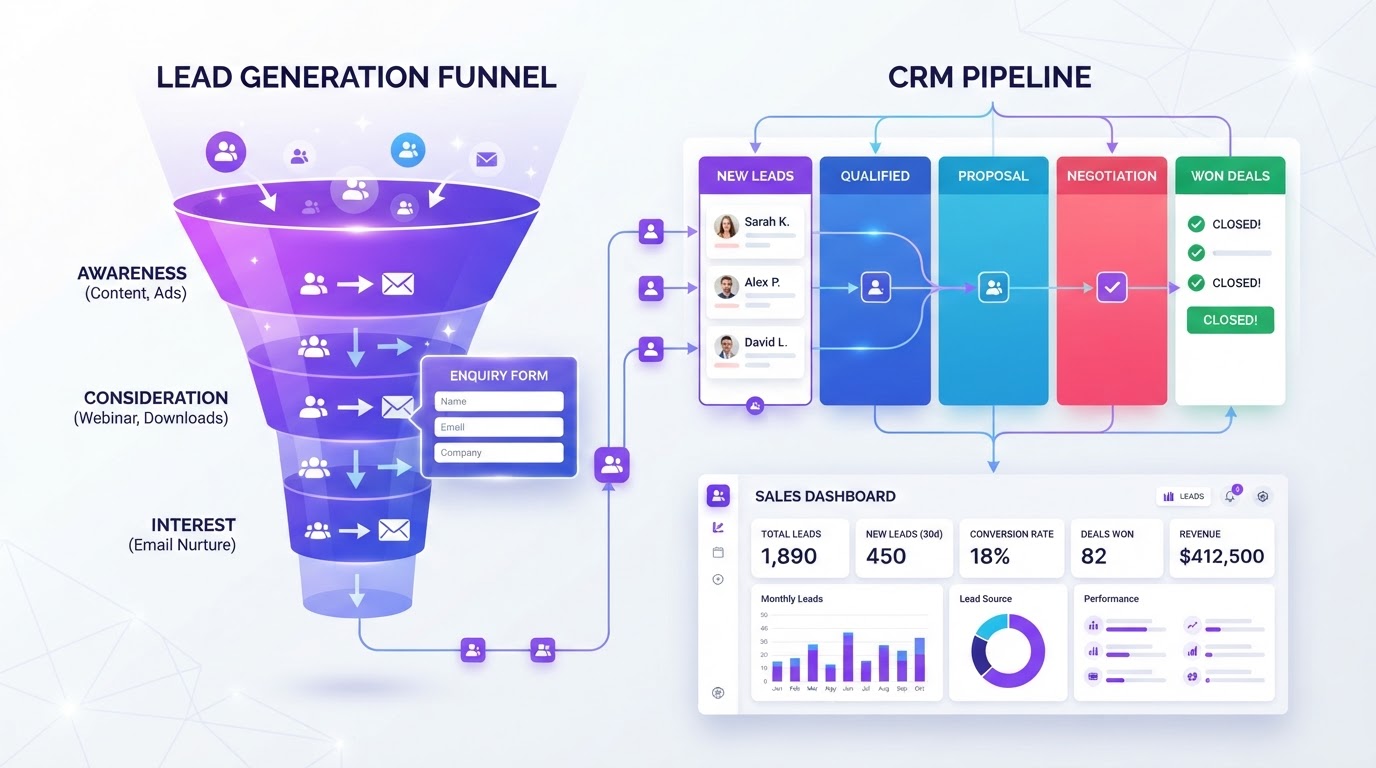
Generate More Leads: Building A System, Not Just Running Ads
More leads come from a joined-up system, capture, qualification, instant follow-up and nurturing, not isolated tactics. Here's how to build a lead engine that doesn't leak.
Read Article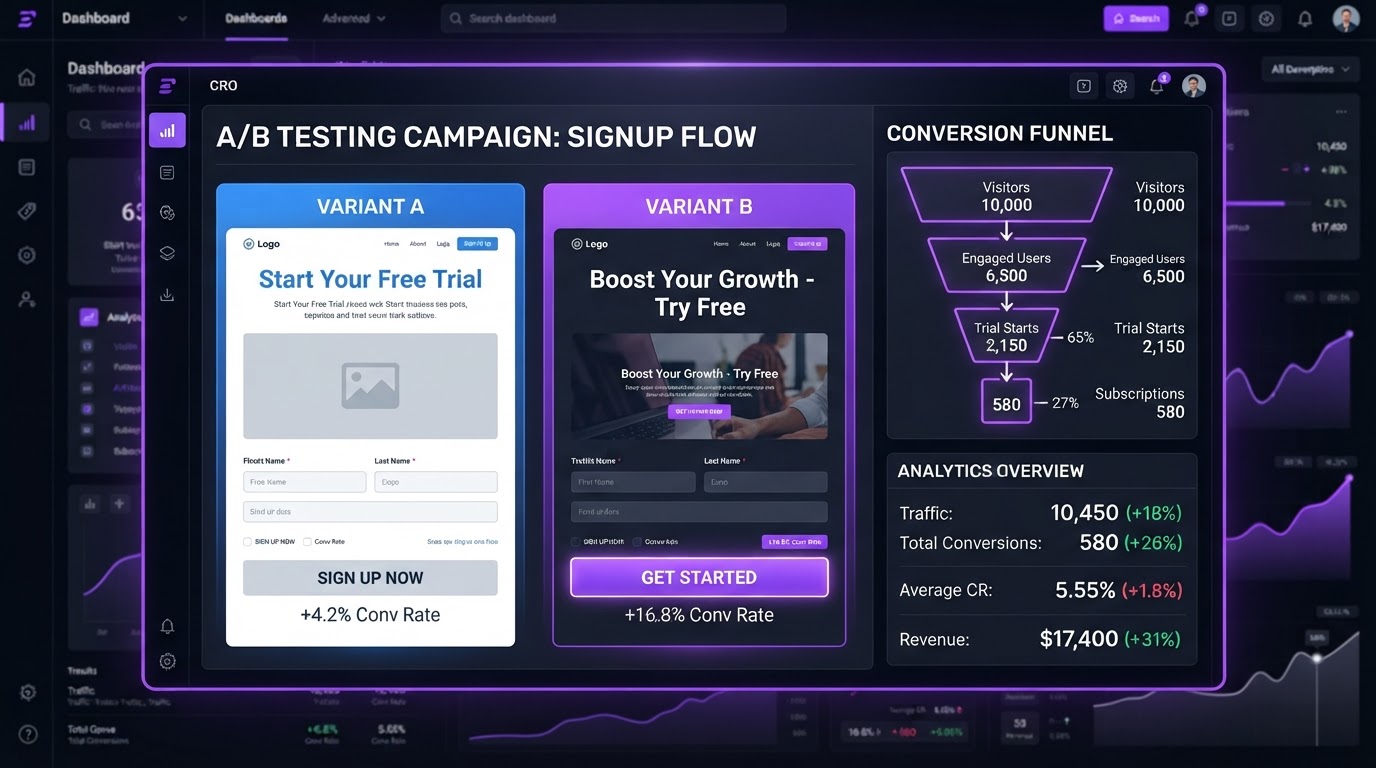
Improve Conversion Rates: Turning Website Visitors Into Paying Customers
Traffic without conversion is wasted budget. A practical UK guide to conversion rate optimisation, speed, messaging, calls to action, forms and testing.
Read Article