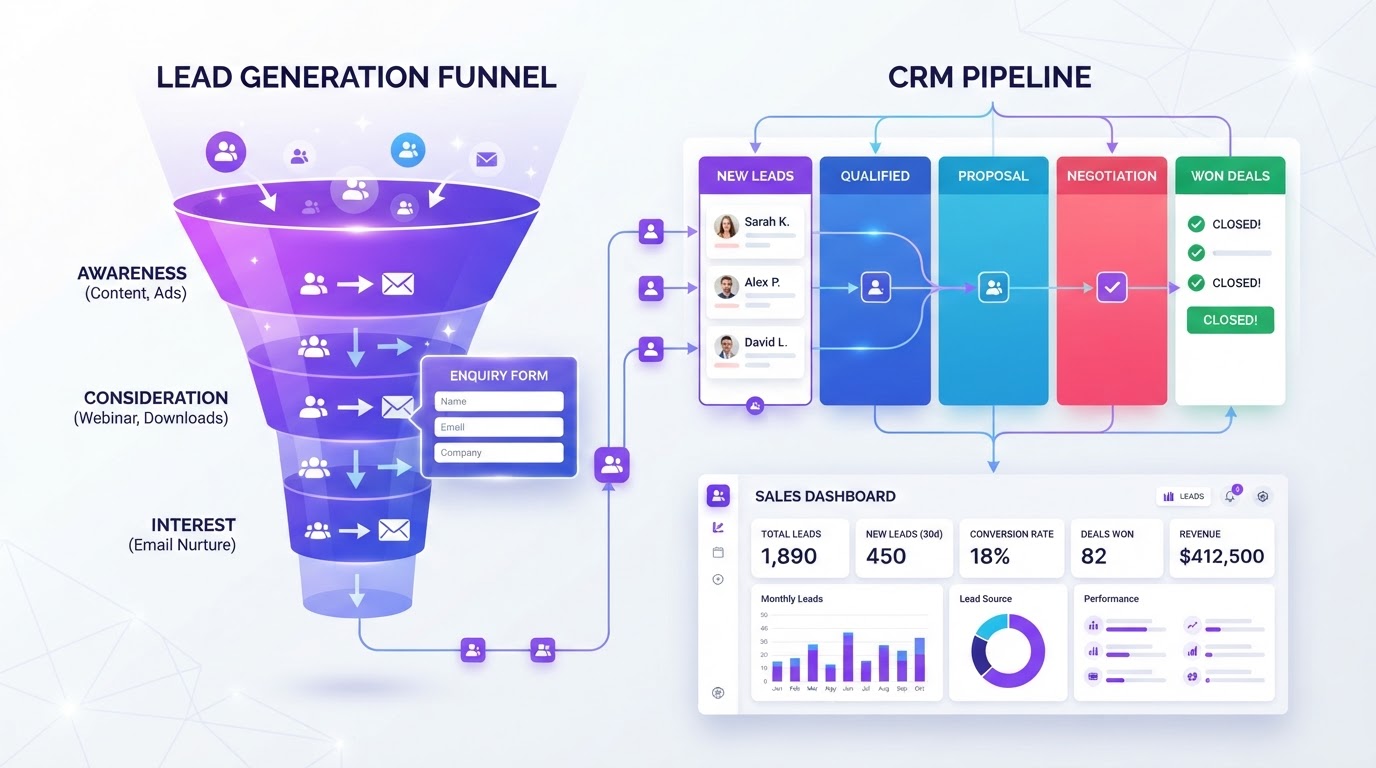
Generate More Leads: Building A System, Not Just Running Ads
More leads come from a joined-up system, capture, qualification, instant follow-up and nurturing, not isolated tactics. Here's how to build a lead engine that doesn't leak.
Why most lead generation efforts fail
When UK businesses want more leads, they typically do one of two things: run some ads, or redesign their website. Both can help, but in isolation they almost always underperform, because leads aren't produced by a single tactic, they're produced by a system.
A great ad that sends traffic to a weak landing page produces bounces. A great landing page with no follow-up lets enquiries go cold. A fast follow-up with no nurturing loses the prospects who weren't ready to buy today. Each gap in the system leaks leads you've already paid to attract.
The businesses that generate leads reliably treat the whole journey as one connected system: attract, capture, qualify, respond instantly, nurture, and convert. Fix any single stage and you improve results; fix the system and you transform them.
Stage one: attract the right traffic
Lead generation starts with bringing the right visitors to your capture points. The 'right' visitors are those with genuine intent and means to buy, not just anyone. Quality of traffic matters more than quantity.
Google Ads captures the highest-intent traffic, people actively searching for your service. SEO builds sustainable organic traffic over time. Paid social generates demand among audiences who match your customers. The right mix depends on your market, but the principle is constant: target relevance over volume.
We track traffic quality by source, measuring not just visits but enquiry rate and conversion by channel. This reveals which sources produce actual business, so you invest where ROI is strongest rather than chasing busy-but-useless traffic.
Stage two: capture with conversion-focused design
Traffic is worthless if it doesn't convert into an enquiry. The capture stage, your landing pages, forms, and calls to action, determines what percentage of visitors become leads.
Effective capture design removes friction: fast pages, clear value propositions, prominent calls to action, and forms that ask only for what's essential. Multi-step forms often convert better than long single forms because they feel easier while capturing the same information.
Every capture point should have a single clear goal and make achieving it obvious. A visitor should never wonder what to do next. Confusion kills conversion; clarity drives it.
Stage three: qualify without friction
Not all enquiries are equal. A lead with genuine intent and budget is worth far more than a casual enquiry, and your sales team's time is finite. Qualification built into your capture process sorts the serious from the time-wasters.
This doesn't mean long, intimidating forms. A few well-chosen questions, budget range, timeline, project type, can qualify leads without dramatically reducing conversion. Lead scoring then ranks enquiries by intent and value, so hot leads get immediate personal attention while cooler contacts enter automated nurturing.
The goal is to focus human effort where it converts, while automation handles the rest. This dramatically improves both conversion rate and sales efficiency.
Stage four: respond instantly
Speed of response is one of the strongest predictors of lead conversion. Studies consistently show that the odds of converting a lead drop dramatically after the first five minutes, yet most businesses take hours or days to respond.
An automated instant response, an immediate personalised email or SMS acknowledging the enquiry and setting expectations, keeps the lead warm while your team prepares to follow up personally. This single automation often produces a measurable lift in conversion.
For the personal follow-up, automation can notify the right team member instantly, create a CRM task, and schedule reminders, so no enquiry is missed and response time drops to minutes rather than hours.
Stage five: nurture the not-yet-ready
Most leads aren't ready to buy the moment they enquire. They're researching, comparing, or waiting for the right timing. Without nurturing, these prospects go cold and buy from a competitor who stayed in touch.
A nurture sequence, a series of timed, relevant emails that educate and build trust, keeps your brand in front of prospects until they're ready to convert. Good nurturing provides genuine value (useful content, relevant offers, helpful information) rather than just sales pressure.
Nurtured leads consistently convert at a higher rate and higher value than cold enquiries, because by the time they're ready, your business is the trusted, familiar choice. This is where marketing automation earns its keep.
Stage six: measure and optimise the system
A lead generation system is only as good as its measurement. Track leads by source, conversion rate at each stage, cost per lead, cost per acquisition, and ultimately revenue, so you can see exactly where the system performs and where it leaks.
This data drives continuous optimisation: which channels to invest in, which landing pages to improve, which nurture emails to refine. The system gets better over time because every decision is informed by real performance rather than guesswork.
Proper CRM integration is essential, every lead logged, every touchpoint tracked, every source attributed. Without it, you're optimising blind. With it, you have a clear, commercial view of your lead engine.
Building your lead generation system
A complete lead generation system combines web design, paid advertising, capture forms, CRM integration, automation, and analytics, working as one. It's more than any single service delivers, which is why we build it as an integrated solution rather than isolated tactics.
The investment pays for itself quickly, because a systemised approach captures and converts leads that a fragmented one loses. Most businesses are already paying for traffic, a lead generation system simply ensures that traffic produces actual business.
If you're getting traffic but not enough enquiries, or enquiries but not enough customers, the system has a leak. A free review identifies exactly where, and the highest-impact fixes to plug it.
Related Services
Lead Generation: Your Questions Answered
The exact questions UK business owners ask, including the terms people type into AI search assistants.
Ready to act on what you've read?
Get a free, no-obligation marketing review tailored to your business. A UK specialist will analyse your online presence and show you exactly how to apply these principles, within 24 hours.
Or call us: 03333 356780Request Your Free Review
Clear, actionable insights into your marketing performance.
Related Articles
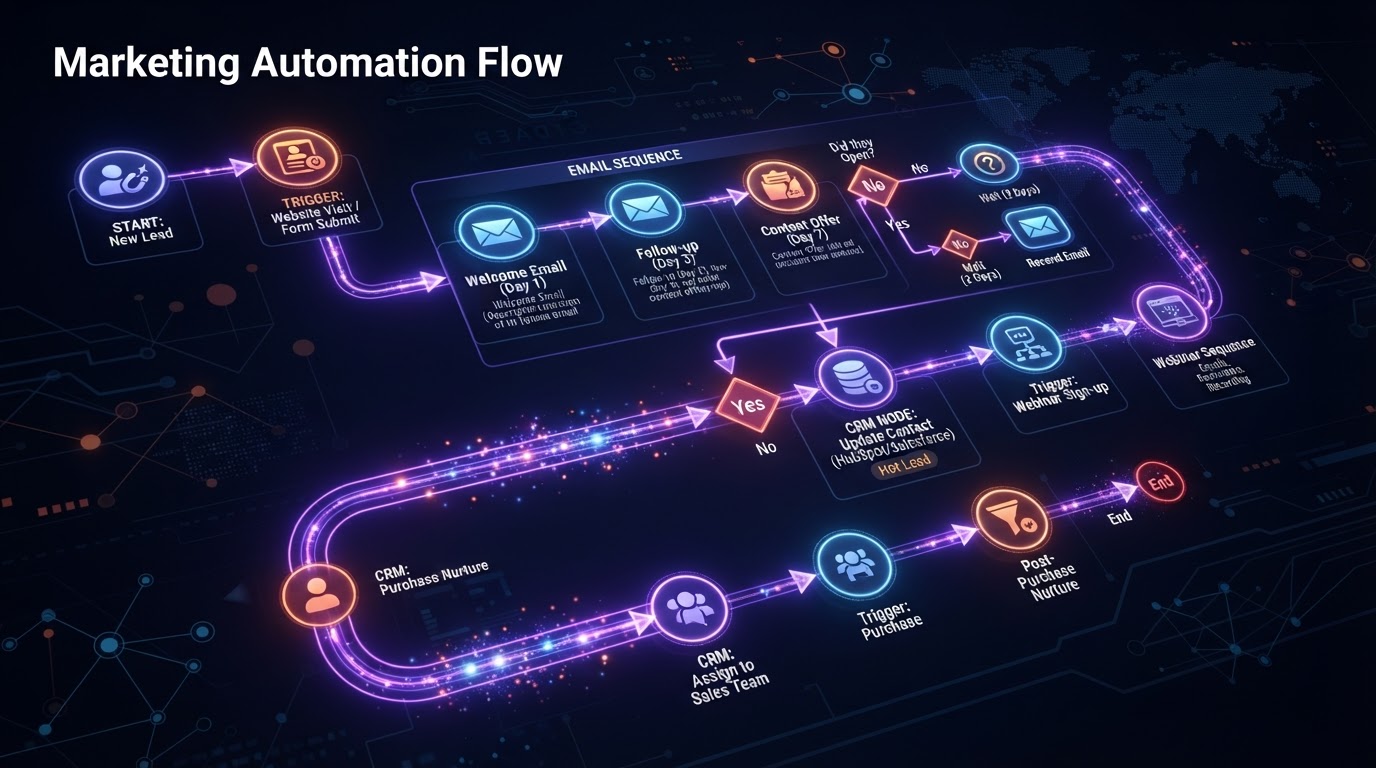
Marketing Automation: Nurture Leads Automatically And Never Lose An Enquiry
Automation turns occasional enquiries into a reliable pipeline. A UK guide to instant follow-up, nurture sequences, and CRM workflows that convert leads without manual chasing.
Read Article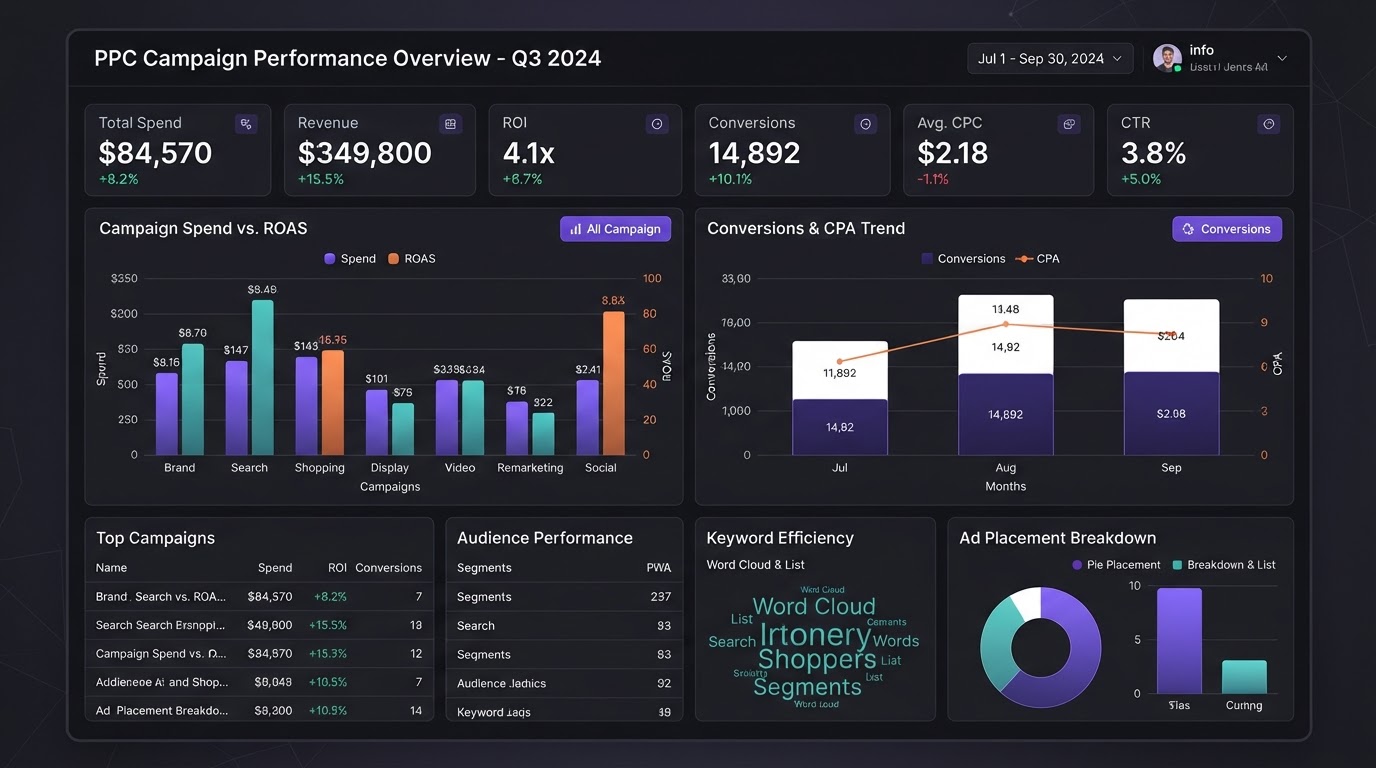
PPC Management: Eliminating Wasted Google Ads Spend In Competitive UK Niches
A practical guide to negative match types, search query auditing, and Performance Max structuring to maximise return on ad spend and stop paying for irrelevant clicks.
Read Article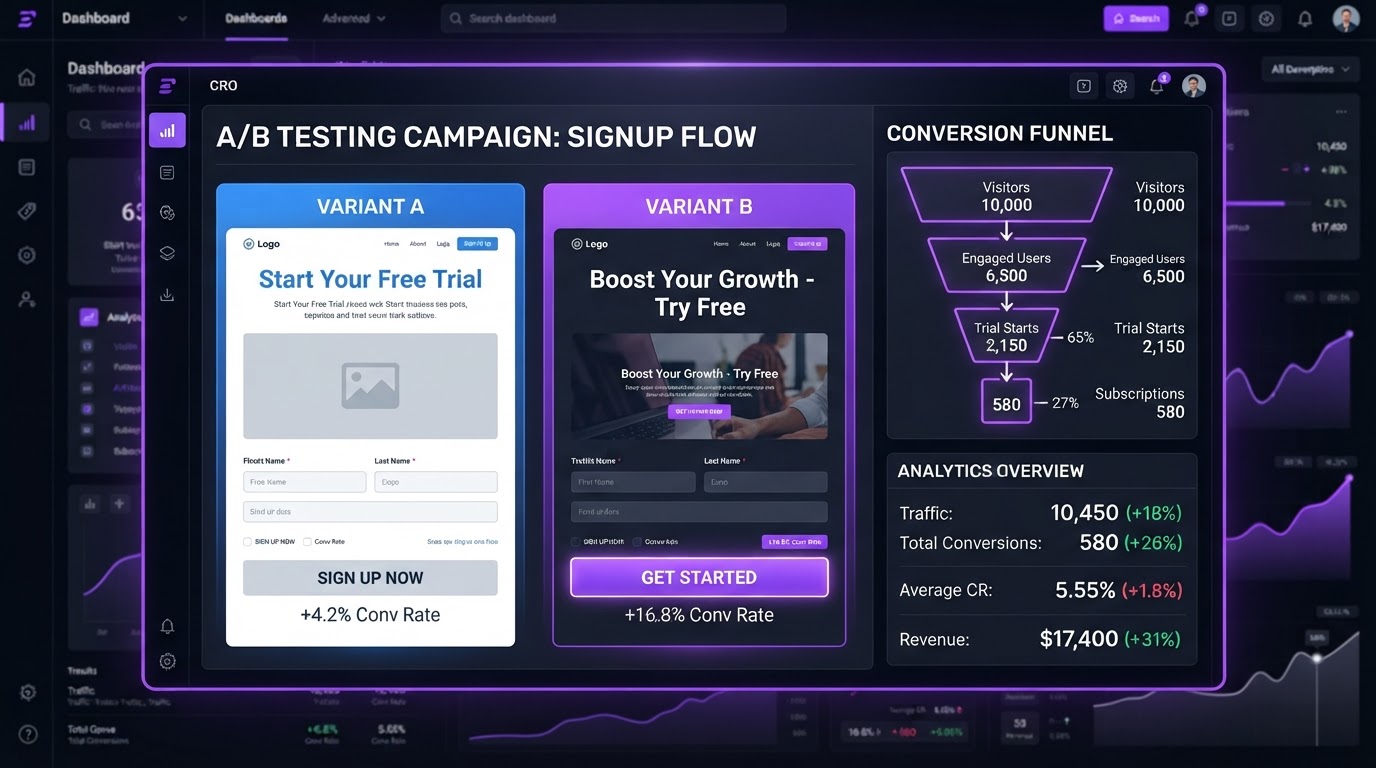
Improve Conversion Rates: Turning Website Visitors Into Paying Customers
Traffic without conversion is wasted budget. A practical UK guide to conversion rate optimisation, speed, messaging, calls to action, forms and testing.
Read Article